
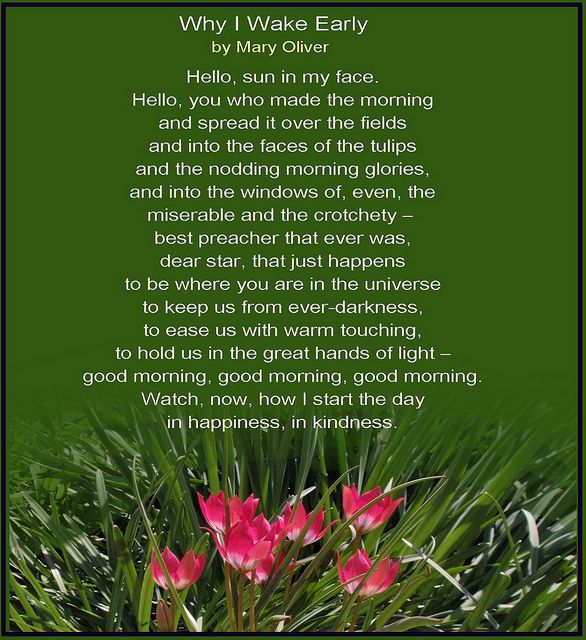
When it comes to capturing the beauty and essence of nature in words, few poets can compare to Mary Oliver. Born in 1935 in Maple Heights, Ohio, Oliver dedicated her life to exploring the wonders of the natural world and sharing her experiences through her poetry. Her works have touched the hearts of countless readers, inspiring them to connect with nature on a deeper level. In this article, we will delve into the unique and beautiful nature poems by Mary Oliver that have made her one of the most beloved poets of our time.
Oliver’s poetry is characterized by its simplicity and accessibility, making it relatable to readers from all walks of life. Her keen observations and deep reverence for nature are evident in every line, transporting readers to the tranquil forests, meadows, and coastlines she often wrote about. Through her poems, Oliver encourages us to slow down, pay attention, and appreciate the small miracles that surround us every day.
One of the most remarkable aspects of Oliver’s poetry is her ability to find beauty and meaning in the seemingly ordinary. Her words have a way of transforming the mundane into something extraordinary, reminding us that there is magic to be found in the simplest of things. Whether it’s a blade of grass, a wildflower, or a bird in flight, Oliver’s poems celebrate the resilience and interconnectedness of all living beings.
Unique and Beautiful Nature Poems by Mary Oliver
“The Summer Day”
Who made the world?
Who made the swan, and the black bear?
Who made the grasshopper?
This grasshopper, I mean—
the one who has flung herself out of the grass,
the one who is eating sugar out of my hand,
who is moving her jaws back and forth instead of up and down—
who is gazing around with her enormous and complicated eyes.
Now she lifts her pale forearms and thoroughly washes her face.
Now she snaps her wings open, and floats away.
I don’t know exactly what a prayer is.
I do know how to pay attention, how to fall down
into the grass, how to kneel down in the grass,
how to be idle and blessed, how to stroll through the fields,
which is what I have been doing all day.
Tell me, what else should I have done?
Doesn’t everything die at last, and too soon?
Tell me, what is it you plan to do
with your one wild and precious life?”
“Wild Geese”
You do not have to be good.
You do not have to walk on your knees
for a hundred miles through the desert, repenting.
You only have to let the soft animal of your body
love what it loves.
Tell me about despair, yours, and I will tell you mine.
Meanwhile the world goes on.
Meanwhile the sun and the clear pebbles of the rain
are moving across the landscapes,
over the prairies and the deep trees,
the mountains and the rivers.
Meanwhile the wild geese, high in the clean blue air,
are heading home again.
Whoever you are, no matter how lonely,
the world offers itself to your imagination,
calls to you like the wild geese, harsh and exciting—
over and over announcing your place
in the family of things.”
“When Death Comes”
When death comes
like the hungry bear in autumn;
when death comes and takes all the bright coins from his purse
to buy me, and snaps the purse shut;
when death comes
like the measle-pox
when death comes
like an iceberg between the shoulder blades,
I want to step through the door full of curiosity, wondering:
what is it going to be like, that cottage of darkness?
And therefore I look upon everything
as a brotherhood and a sisterhood,
and I look upon time as no more than an idea,
and I consider eternity as another possibility,
and I think of each life as a flower, as common
as a field daisy, and as singular,
and each name a comfortable music in the mouth
tending as all music does, toward silence,
and each body a lion of courage, and something
precious to the earth.
When it’s over, I want to say all my life
I was a bride married to amazement.
I was the bridegroom, taking the world into my arms.
When it’s over, I don’t want to wonder
if I have made of my life something particular, and real.
I don’t want to find myself sighing and frightened,
or full of argument.
I don’t want to end up simply having visited this world.”
“Morning Poem”
Every morning
the world
is created.
Under the orange
sticks of the sun
the heaped
ashes of the night
turn into leaves again
and fasten themselves to the high branches—
and the ponds appear
like black cloth
on which are painted islands
of summer lilies.
If it is your nature
to be happy
you will swim away along the soft trails
for hours, your imagination
alighting everywhere.
And if your spirit
carries within it
the thorn
that is heavier than lead—
if it’s all you can do
to keep on trudging—
there is still
somewhere deep within you
a beast shouting that the earth
is exactly what it wanted—
each pond with its blazing lilies
is a prayer heard and answered
lavishly,
every morning,
whether or not
you have ever dared to be happy,
whether or not
you have ever dared to pray.”
“The Black Walnut Tree”
The black walnut tree has whispered the truth
to me, over and over again.
I am going to die.
I am going to die, and I was hungry.
The black walnut tree has whispered the truth
to me, over and over again.
You have your own destiny, it says.
You have your own destiny, you know.
I, too, have known it for a long time.
I, too, have known it for a long time,
but I am not ready to leave.
I am not ready to leave, but I have no choice.
I am not ready to leave, but I have no choice,
and when the time comes,
when the time comes, I will go.
I will go, and the black walnut tree
will continue to whisper the truth
to those who listen.
“The Journey”
One day you finally knew
what you had to do, and began,
though the voices around you
kept shouting
their bad advice—
though the whole house
began to tremble
and you felt the old tug
at your ankles.
“Mend my life!”
each voice cried.
But you didn’t stop.
You knew what you had to do,
though the wind pried
with its stiff fingers
at the very foundations,
though their melancholy
was terrible.
It was already late
enough, and a wild night,
and the road full of fallen
branches and stones.
But little by little,
as you left their voices behind,
the stars began to burn
through the sheets of clouds,
and there was a new voice
which you slowly
recognized as your own,
that kept you company
as you strode deeper and deeper
into the world,
determined to do
the only thing you could do—
determined to save
the only life you could save.”
“The Swan”
Did you too see it, drifting, all night,
on the black river?
Did you see it in the morning, rising into the silvery air—
an armful of white blossoms,
a perfect commotion of silk and linen
as it leaned into the bondage of its wings:
a snowbank, a bank of lilies,
biting the air with its black beak?
Did you hear it, fluting and whistling
a shrill dark music—like the rain pelting the trees—
like a waterfall
knifing down the black ledges?
And did you see it, finally, just under
the clouds—a white cross
patiently floating,
and did you feel it, in your heart,
how it pertained to everything?
And have you too finally figured out what beauty is for
and have you changed your life?”
“In Blackwater Woods”
Look, the trees
are turning
their own bodies
into pillars
of light,
are giving off the rich
fragrance of cinnamon
and fulfillment,
the long tapers
of cattails
are bursting and floating away over
the blue shoulders
of the ponds,
and every pond,
no matter what its
name is, is
nameless now.
Every year
everything
I have ever learned
in my lifetime
leads back to this:
the fires
and the black river of loss
whose other side
is salvation,
whose meaning
none of us will ever know.
To live in this world
you must be able
to do three things:
to love what is mortal;
to hold it
against your bones knowing
your own life depends on it;
and, when the time comes to let it go,
to let it go.”
“In the Storm”
Some black ducks
were shrugged up
on the shore.
It was snowing
hard, from the east,
and the sea
was in disorder.
Then some sanderlings,
five inches long
with beaks like wire,
flew in,
snowflakes on their backs,
and settled
in a row
behind the ducks—
whose backs were also
covered with snow—
so close
they were all but touching,
they were all but under
the roof of the ducks’ tails,
so the wind, pretty much,
blew over them.
They stayed that way, motionless,
for maybe an hour,
then the sanderlings,
each a handful of feathers,
shifted, and were blown away
out over the water,
which was still raging.
But, somehow,
they came back
and again the ducks,
began to lean
like dancers in a row.
Then, finally, the sanderlings’ own weight,
or lack of it,
became apparent.
They couldn’t weigh more than snowflakes,
so they tumbled away,
or fluttered,
or slid into the water
and their lives,
as far as I know,
are still getting along
somewhere, sliding
under the water,
fluttering in the wind,
like nothing in this world
that I know.”
“When I am Among the Trees”
When I am among the trees,
especially the willows and the honey locust,
equally the beech, the oaks, and the pines,
they give off such hints of gladness.
I am so distant from the hope of myself,
in which I have goodness, and discernment,
and never hurry through the world
but walk slowly, and bow often.
Around me the trees stir in their leaves
and call out, “Stay awhile.”
The light flows from their branches.
And they call again, “It’s simple,” they say,
“and you too have come
with light, and to shine.”
“The Summer I Was Sixteen”
The turquoise pool rose up to meet us,
its slide a silver afterthought down which
we plunged, screaming, into a mirage of bubbles.
We did not exist beyond the gaze of a boy.
I could not know how in that gaze
everything ripened and was fulfilled,
whereas I lived in a body newly come,
impulse and wonder, my secret self
beside me in a bag of skin.
That would never change.
But the body changed,
and the gaze which stayed
unwavering and sure,
whereas I lived in a body newly come,
impulse and wonder, my secret self
beside me in a bag of skin.
That would never change.
But the body changed,
and the gaze which stayed
unwavering and sure,
no matter what the boy
became or wherever he went
or wherever I went or what
I became, that gaze
and the summer heat
came to be the same.
These are just a few examples of the many nature poems that Mary Oliver has gifted the world. Her words are a reminder of the beauty and wonder that surrounds us, urging us to be present and appreciate the natural world. Through her poetry, Oliver invites us to embark on our own journeys of exploration and self-discovery, finding solace and inspiration in the embrace of nature.
Related Post: